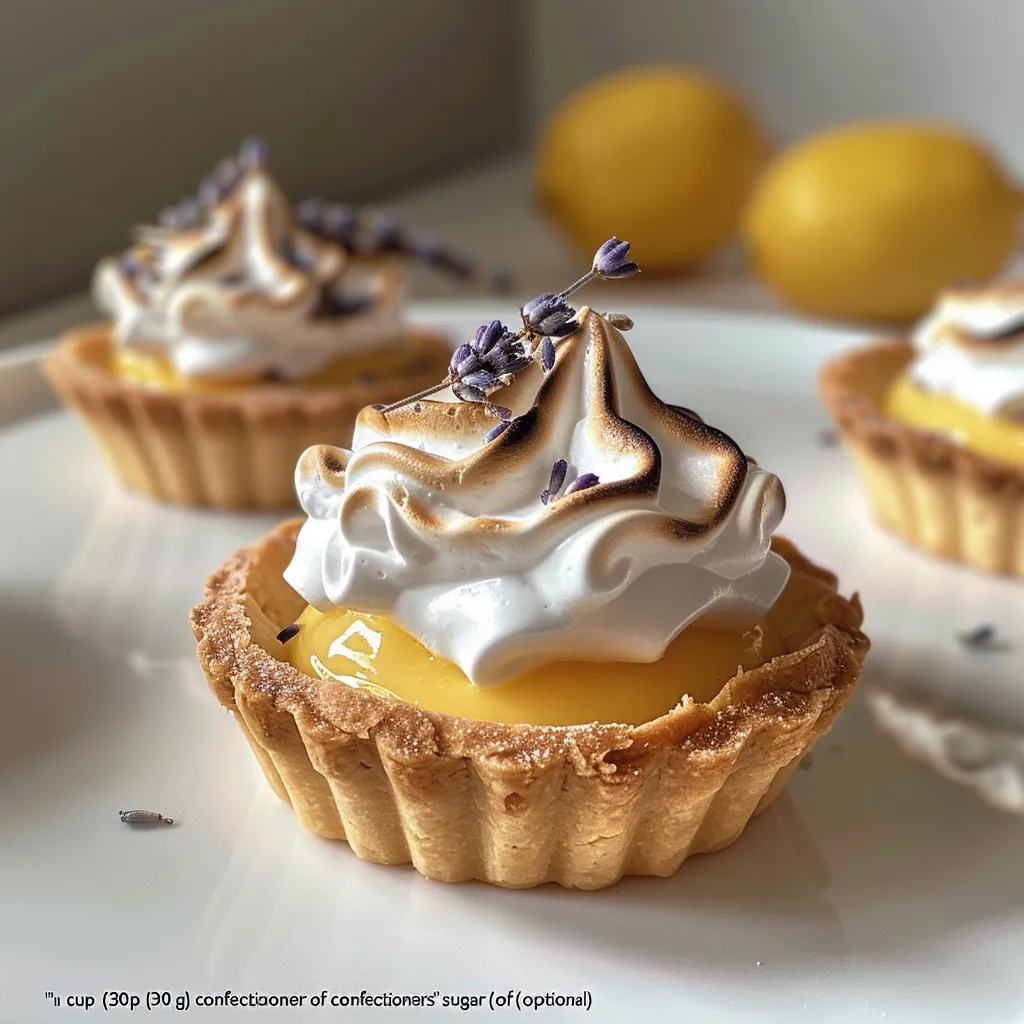
Discover the Delights of Lemon Lavender Meringue Tartlets
If you’re looking to elevate your dessert game, look no further than these enchanting lemon lavender meringue tartlets. Perfectly balancing zesty lemon and fragrant lavender, this dessert not only looks impressive but also delivers a delightful explosion of flavors that will leave your taste buds singing. In this comprehensive guide, we’ll explore every aspect of making these exquisite tartlets, from the ingredients to expert tips and troubleshooting advice, ensuring that your baking experience is a success.
Why You’ll Love This Recipe
- Unique Flavor Profile: The combination of zesty lemon and aromatic lavender creates a refreshing dessert that’s perfect for any occasion.
- Elegant Presentation: These tartlets look stunning on any table, making them ideal for parties, gatherings, or a simple family dinner.
- Make-Ahead Friendly: With a few simple steps, you can prepare these tartlets ahead of time, making entertaining a breeze.
- Versatile Ingredients: Using everyday pantry staples, you can create a dessert that feels gourmet without breaking the bank.
- Perfect for Any Season: Whether it’s a spring garden party or a summer picnic, these tartlets are a delightful treat year-round.
Ingredients Breakdown
To create these luscious lemon lavender meringue tartlets, you’ll need the following ingredients:
- 1 cup (130 g) all-purpose flour: The base for your tart crust. Consider using whole wheat flour for a nuttier flavor.
- ¼ cup (30 g) confectioners’ sugar: Adds sweetness to the crust. You can substitute with granulated sugar, but the texture may differ.
- ⅛ tsp kosher salt: Enhances the flavors of the dessert.
- ½ cup (113 g) cold unsalted butter, diced: Essential for a flaky crust; ensure it’s cold for the best texture.
- 1 tsp ice water: Helps bind the dough together.
- 3 large eggs + 3 egg yolks: The foundation of the lemon curd filling; reserve the whites for the meringue.
- ¾ cup (150 g) granulated sugar: Sweetens the curd without adding graininess.
- Zest of 2 large lemons (about 2 tsp): Adds intense lemon flavor.
- ½ cup (120 ml) fresh lemon juice (≈ 2 lemons): The star of the filling; fresh juice is key!
- 1 tsp culinary lavender buds, lightly crushed: Infuses the curd with floral notes.
- 4 Tbsp (56 g) unsalted butter, cold, cubed: Added richness to the curd.
- 3 large egg whites (from above): For the meringue topping.
- ½ tsp cornstarch (for stability): Helps stabilize the meringue.
- ½ cup (100 g) granulated sugar: For sweetening the meringue.
- Pinch cream of tartar (or a splash of lemon juice): Stabilizes the egg whites.
- Extra lavender buds, sifted through tea strainer for garnish (optional): For a beautiful presentation.
- Dusting of confectioners’ sugar (optional): Adds a touch of elegance.
- Candied lemon peel curls (optional): For garnish, enhancing both flavor and appearance.
Step-by-Step Instructions
Follow these detailed steps to create your lemon lavender meringue tartlets:
- Pulse the crust: In a food processor, blitz the flour, confectioners’ sugar, salt, and cold butter until the mixture resembles damp sand. Drizzle in the ice water while pulsing until the dough holds together when pinched.
- Chill: Shape the dough into a disk, wrap it in plastic, and refrigerate for 20 minutes (or freeze for 10 minutes) while you prepare your equipment.
- Shape shells: Roll the chilled dough to ⅛-inch thickness. Cut out 2¾-inch circles and press them into a mini-muffin tin, docking the base with a fork. Chill again for 10 minutes.
- Bake: Preheat your oven to 350 °F (175 °C) and bake for 12–14 minutes until the edges are lightly golden. Let the shells cool completely in the pan.
- Start curd: In a stainless bowl set over a double boiler, whisk together the eggs, yolks, sugar, lemon zest, lemon juice, and lavender. Stir constantly until thickened (about 8–10 minutes, or until it reaches 170 °F / 77 °C).
- Enrich: Remove the curd from heat and whisk in the cold butter cubes one at a time. Strain the mixture through a fine sieve to remove lavender bits and any curdled egg.
- Fill shells: Spoon warm curd into the baked tart shells, leveling off with the back of a spoon. Refrigerate for at least 1 hour to set.
- Meringue magic: In a clean bowl, whisk the reserved egg whites, cornstarch, and cream of tartar to soft peaks. Gradually add in the sugar, beating until glossy stiff peaks form.
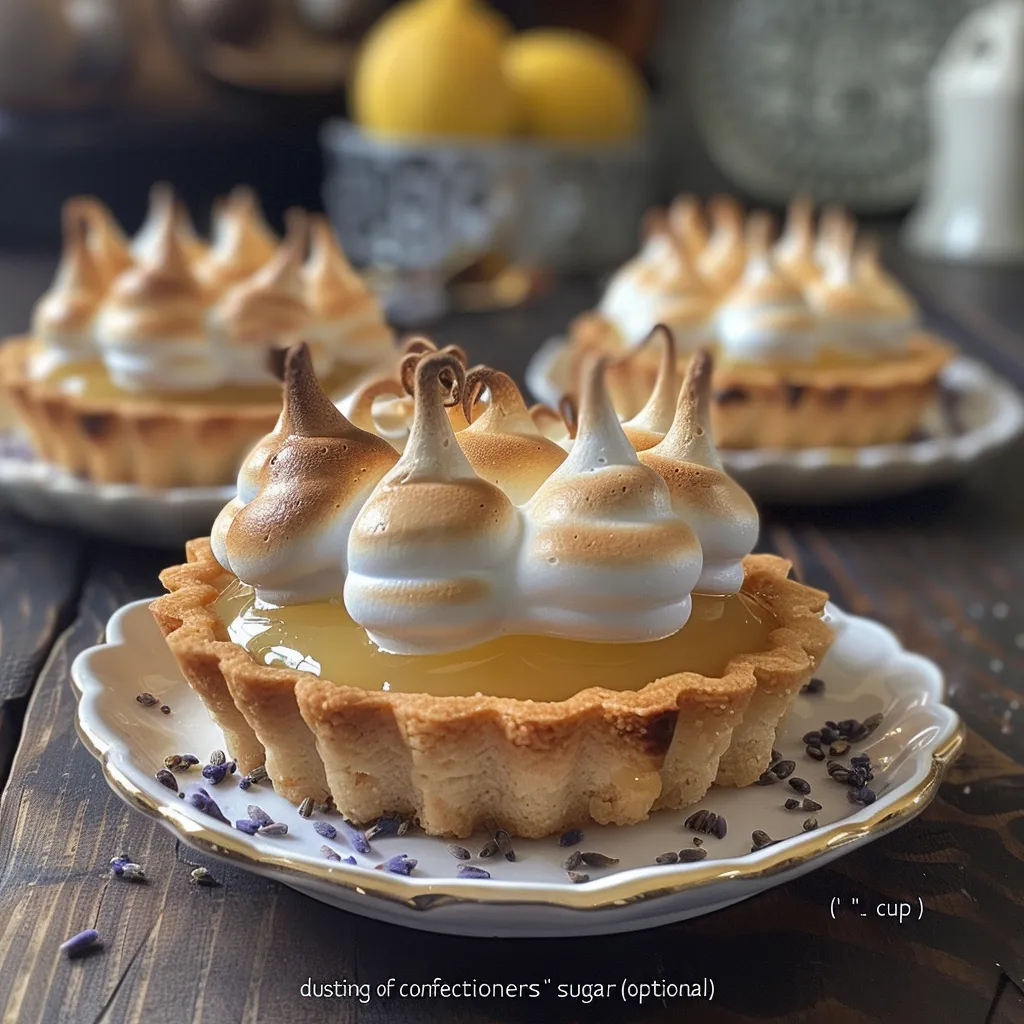
- Pipe: Transfer the meringue to a piping bag fitted with a star tip and swirl high rosettes onto the chilled tarts.
- Toast: Use a kitchen torch to lightly toast the peaks until golden speckles appear. Alternatively, place the tarts under a broiler for 45–60 seconds, keeping a close eye on them.
- Serve or store: Enjoy immediately for a crispy meringue crust, or refrigerate uncovered for up to 3 hours (as humidity can soften the meringue).
Pro Tips for Perfect Tartlets
- Chill your tools: For best results, chill your mixing bowl and utensils before making the meringue to help stabilize the egg whites.
- Use fresh ingredients: Fresh lemon juice and zest are crucial for optimal flavor—don’t use bottled juice.
- Don’t rush the curd: Stir continuously while cooking the lemon curd to prevent scrambling the eggs and achieve a silky texture.
- Opt for a kitchen torch: Investing in a kitchen torch can give you precise control over toasting the meringue, achieving that beautiful golden color.
- Store correctly: If preparing ahead, store the tartlets uncovered in the refrigerator to maintain the meringue’s texture.
- Experiment with flavors: Feel free to swap lavender with other herbs like rosemary or thyme for unique flavor variations.
- Make extra meringue: If you love meringue, make a bit more to enjoy as a treat on its own!
- Check for doneness: When baking the tart shells, they should be just golden—overbaking can lead to a dry crust.
Common Mistakes and Troubleshooting
Even seasoned bakers can face challenges. Here are some common pitfalls and solutions:
- Meringue weeping: This can occur if the meringue is not cooked long enough or if there’s too much humidity. Make sure to bake until stiff peaks form and store in a cool, dry place.
- Curd is too runny: If your lemon curd doesn’t thicken, it may need more time over the heat. Keep stirring and check the temperature.
- Crust shrinks during baking: Ensure your dough is chilled before baking and avoid overworking the dough.
- Overbaking meringue: Keep a close eye on your meringue while toasting to prevent burning—this can happen quickly!
Delicious Variations
Once you’ve mastered the classic version, try these fun twists:
- Berry Bliss: Add a layer of fresh berries (like raspberries or blueberries) on top of the lemon curd before adding the meringue.
- Chocolate Delight: Incorporate cocoa powder into the meringue for a chocolatey twist.
- Herbal Infusion: Experiment with other herbs such as mint or basil for a unique flavor profile.
- Nutty Crust: Substitute part of the all-purpose flour with almond flour for a delicate nutty flavor.
Storage and Make-Ahead Instructions
These tartlets can be made ahead of time, making them a convenient choice for entertaining:
- Chilling the shells: Tart shells can be baked and stored at room temperature for up to 2 days before filling.
- Curd storage: Lemon curd can be made in advance and stored in the refrigerator for up to 1 week.
- Meringue topping: It’s best to make the meringue fresh, but if needed, it can be stored in the fridge for a few hours before whipping and piping onto the tarts.
FAQs About Lemon Lavender Meringue Tartlets
- Can I use dried lavender instead of fresh? Fresh is recommended for the best flavor, but culinary-grade dried lavender can work in a pinch.
- Can I substitute lemon with another citrus? Absolutely! Lime or orange can add a different, yet delightful flavor.
- How do I know when my meringue is done? The meringue should form stiff peaks and be glossy. It should hold its shape when piped.
- Can I use store-bought lemon curd? Yes, for convenience, but homemade offers a fresher taste.
- What’s the best way to garnish these tartlets? Fresh edible flowers, additional lavender buds, or candied citrus peels make beautiful garnishes.
- How do I prevent my meringue from deflating? Ensure all your equipment is clean and dry, and avoid introducing any fat or moisture.
- Can I freeze these tartlets? It’s best to freeze the tart shells separately, as meringue does not freeze well.
- How long do these tartlets last? They’re best enjoyed within 24 hours, but can be stored in the fridge for up to 3 days.
Nutritional Tips and Dietary Adaptations
If you’re looking to adapt this recipe for dietary needs:
- Gluten-Free: Substitute all-purpose flour with a gluten-free blend.
- Dairy-Free: Use vegan butter in the crust and for the lemon curd.
- Lower Sugar: Consider using natural sweeteners like honey or maple syrup, adjusting quantities as needed.
- Vegan Options: Replace eggs with aquafaba for the meringue and use vegan egg substitutes for the curd.
Recommended Equipment
- Mini Muffin Tin: Essential for creating the tartlet shells.
- Food Processor: Makes the crust preparation quick and easy.
- Double Boiler: Necessary for making the lemon curd to ensure gentle heating.
- Piping Bag: For beautifully swirled meringue tops.
- Kitchen Torch: Ideal for toasting the meringue to perfection.
Serving Suggestions
Pair these delightful lemon lavender meringue tartlets with:
- Fresh Berries: A side of mixed berries adds a refreshing touch.
- Herbal Tea: A cup of chamomile or mint tea complements the tart flavors beautifully.
- Light Whipped Cream: A dollop of whipped cream can enhance the dessert’s richness.
- Fancy Cocktails: Serve with a light, citrus-infused cocktail or sparkling water for a festive touch.
Indulging in these lemon lavender meringue tartlets is not just about treating yourself; it’s about creating a moment of joy and connection. Whether you’re celebrating a special occasion or simply enjoying a sweet treat at home, this recipe is sure to impress. With these comprehensive instructions and tips, you’re well on your way to mastering the art of these delightful tartlets. Happy baking!
Lemon Lavender Meringue Tartlets
Ingredients
Crust
- 1 cup all-purpose flour
- 0.25 cup confectioners' sugar
- 0.125 tsp kosher salt
- 0.5 cup cold unsalted butter, diced
- 1 tsp ice water
Lemon Curd
- 3 large eggs + 3 egg yolks (reserve whites for meringue)
- 0.75 cup granulated sugar
- 2 tsp lemon zest (from 2 large lemons)
- 0.5 cup fresh lemon juice (≈ 2 lemons)
- 1 tsp culinary lavender buds, lightly crushed
- 4 Tbsp unsalted butter, cold, cubed
Meringue
- 3 large egg whites (from above)
- 0.5 tsp cornstarch (for stability)
- 0.5 tsp cream of tartar (or a splash of lemon juice)
- 0.5 cup granulated sugar
Instructions
- Pulse flour, sugar, salt, and butter in a food processor until crumbly. Add ice water and pulse until dough comes together.
- Chill dough, then roll out and cut circles. Press into mini-muffin tin, dock, and chill again.
- Bake at 350°F (175°C) for 12–14 min until golden. Cool completely.
- Whisk eggs, yolks, sugar, lemon zest, juice, and lavender over simmering water until thickened. Remove from heat, whisk in butter, strain, and fill tart shells. Chill for 1 hour.
- Whisk egg whites, cornstarch, and cream of tartar to soft peaks. Gradually add sugar and beat to stiff peaks. Pipe onto chilled tarts, then torch until golden.